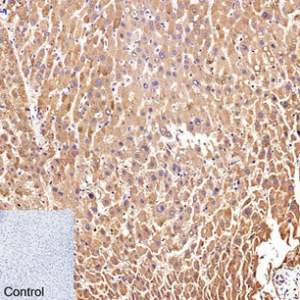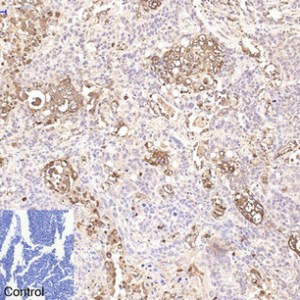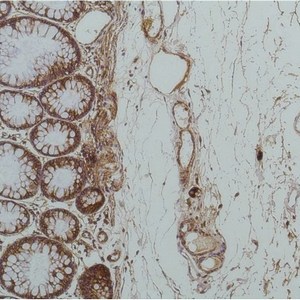
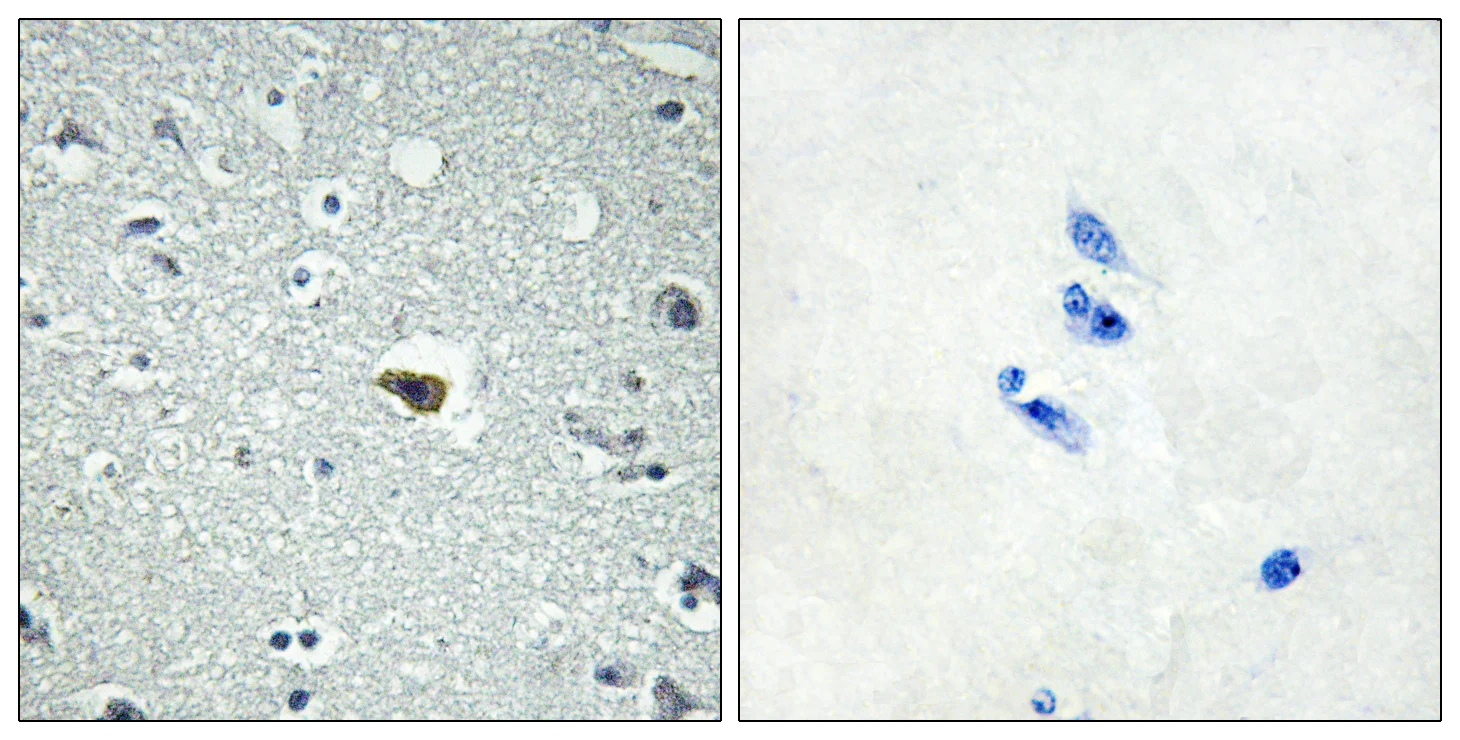


BAI1 Polyclonal Antibody
Clonality: Polyclonal
Host: Rabbit
Reactivity: Human, Mouse
Application: WB, IHC-p, IF, ELISA, TR-FLISA, TR-FRET
Storage: -20°C for 1 year
Conjugation with Bright-Dtech™ on request

Description
Data sheet BAI1 Polyclonal Antibody
Background: Angiogenesis is controlled by a local balance between stimulators and inhibitors of new vessel growth and is suppressed under normal physiologic conditions. Angiogenesis has been shown to be essential for growth and metastasis of solid tumors. In order to obtain blood supply for their growth, tumor cells are potently angiogenic and attract new vessels as results of increased secretion of inducers and decreased production of endogenous negative regulators. BAI1 (adhesion G protein-coupled receptor B1, ADGRB1) contains at least one ‘functional’ p53-binding site within an intron, and its expression has been shown to be induced by wildtype p53. There are two other brain-specific angiogenesis inhibitor genes, designated BAI2 and BAI3 which along with BAI1 have similar tissue specificities and structures, however only BAI1 is transcriptionally regulated by p53. BAI1 is postulated to be a member of the secretin receptor family, an inhibitor of angiogenesis and a growth suppressor of glioblastomas.
Purification: Affinity-purified from rabbit antiserum by affinity-chromatography using epitope-specific immunogen.
Concentration: 1 mg/ml
Formulation: Liquid in PBS containing 50% glycerol, 0.5% BSA and 0.02% sodium azide.
Molecular weight: 173533
Gene ID: Human: 575; Mouse: 107831
Synonyms: BAI1; Brain-specific angiogenesis inhibitor 1
Research area: Cardiovascular
Target protein: BAI1
Additional information
| Weight | 0.7 kg |
|---|---|
| Dimensions | 14 × 15 × 11 cm |
| Size | 20 μL, 50 μL, 100 μL |
Related products
-

CD25 Monoclonal Antibody (Q22)
- Buy Now This product has multiple variants. The options may be chosen on the product page
-

CD15 Monoclonal Antibody (Q89)
- Buy Now This product has multiple variants. The options may be chosen on the product page
-

GRP78/Bip Monoclonal Antibody (10C9)
- Buy Now This product has multiple variants. The options may be chosen on the product page